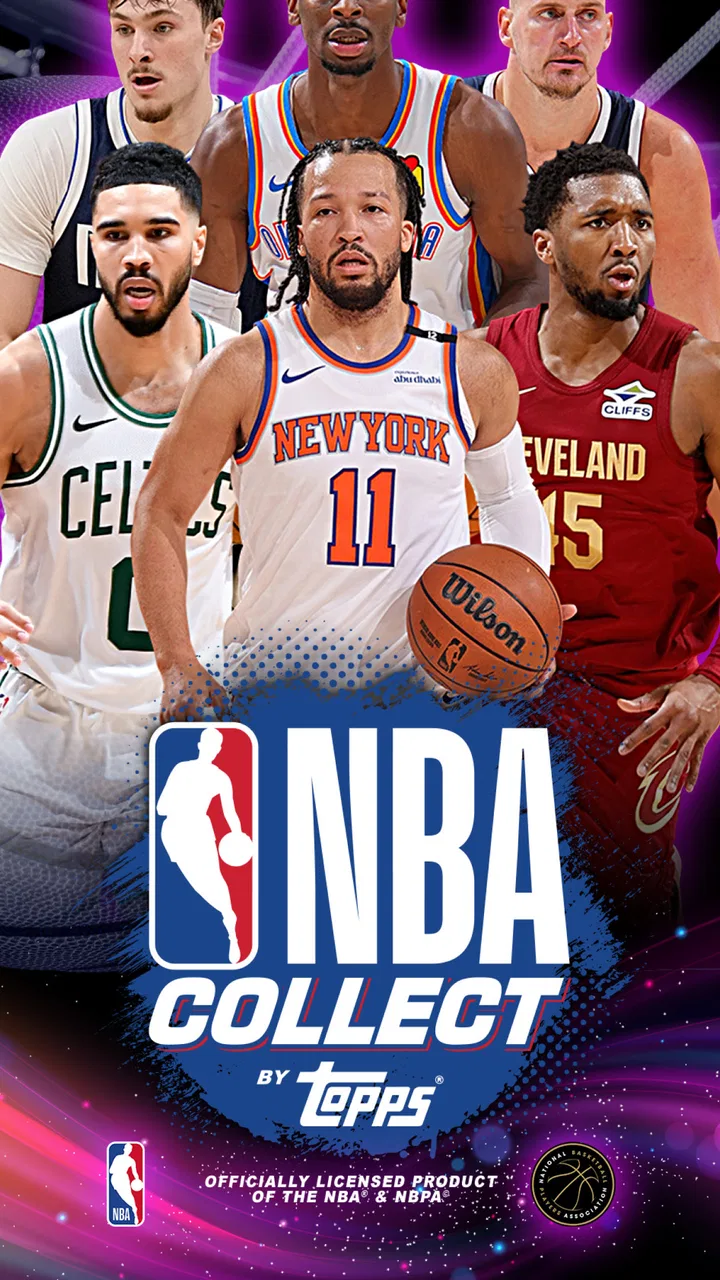
NBA Collect by Topps®
- 4.5
- Rating
- 100.00K
- Installs
- Free
- Price
 Analysis by App-foxy
I approached NBA Collect by Topps® as I would a small digital hobby shop: not simply as a basketball app, but as a place to browse, collect, exchange, and spend time with NBA-themed digital items. That distinction matters. If you want live scores, player statistics, fantasy lineups, or a traditional basketball game, this is not aimed at the same need. Its appeal is the collecting routine itself, with the extra satisfaction of deciding what to keep and what might be worth trading.
The app comes from The Topps Company, Inc. and sits in the Sports category. It is free to start, rated for Everyone, and has reached over a hundred thousand installs. The audience response is encouraging, with a 4.7 average from more than eight hundred ratings and over a hundred reviews. Those figures suggest a healthy level of interest, although they do not change the basic trade-off: the free entry point is welcoming, while optional purchases ranging from under a dollar to nearly a hundred dollars per item can make the hobby more expensive if I stop treating it casually.
From a spare moment to a personal NBA collection
I find that the best way to approach NBA Collect is to decide what a satisfying short visit looks like before I start browsing. In this section, I focus on how a few minutes can become a more purposeful collecting routine, rather than an open-ended scroll. That practical starting point also makes it easier to judge whether the app’s pace suits the way you want to spend time with an NBA hobby.
You May Also Like

 Pandora - Music & Podcasts
Pandora’s Music Is Easy to Start, but Harder to Recover
Pandora’s strength is its low-effort path from a seed to a station. Its weak spot is how much confidence it asks you to place in connection, setup, and quiet recovery.

 AccuWeather: Weather Radar
AccuWeather Review: A Quick, Clear Forecast for Everyday Decisions
For everyday plans, the best forecast is the one you can understand quickly. AccuWeather makes rain timing, radar, and local conditions easy to act on, with a few trade-offs.

 Hill Climb Racing
Why Hill Climb Racing Still Turns Crashes Into One More Run
A tiny car, a bumpy hill and one more upgrade: Hill Climb Racing keeps resurfacing because its simple chaos makes every near-miss feel personal.

 AliExpress - Shopping App
AliExpress Makes Global Shopping Feel Personal, but Shoppers Bear the Risk
AliExpress turns a global marketplace into a pocket-sized discovery engine. Its reach is useful, its shopping loop compelling, and its trade-offs easy to miss.

 Lords Mobile: Kingdom Wars
Lords Mobile Is a Kingdom-Building Routine, Not a Quick Match
A case-by-case verdict on the building, battles, device demands, and social commitments that make Lords Mobile rewarding for some players and exhausting for others.

 PDF Scanner app - TapScanner
TapScanner Makes Paperwork Easier to Capture, Check, and Share
TapScanner makes scanning with a phone feel less like a rescue operation and more like a dependable step in getting work done. Its capture tools are useful, though not flawless.
More From Our News Desk
View All News


What I wanted when I opened it
My starting condition was simple: I wanted something connected to NBA collecting that I could check in short sessions. Physical cards require storage, sorting, and a way to meet other collectors. A general sports news app is better for information, but it does not give me the same feeling of building a collection. NBA Collect fills the space between those two experiences. I can open it with no preparation, look through what is available, and decide whether I want to organize, collect, or trade.
The first useful mindset is to treat the app as a hobby workflow rather than a quick arcade title. The reward is not only the moment an item enters my collection. It comes from the decisions afterward: whether it fits the collection I am building, whether I should hold it for a possible trade, and whether I am comfortable spending anything to accelerate the process. That makes the app more interesting for patient collectors than for someone looking for an immediate match or a fast competitive round.
Because it is free to download, the sensible first step is to explore without committing money. I would spend time learning how the collection is presented, how trading fits into the routine, and how much attention the app demands before considering an in-app purchase. This is one of the most practical ways to use a digital collecting app: first understand the loop, then decide whether the loop is enjoyable enough to justify optional spending.
The basic collection flow
My usual flow begins with browsing. I look at the items available to collect and think about whether I am trying to follow particular players, teams, designs, or simply build a broad NBA-themed set. Even when the app makes collecting feel easy, choosing a personal rule gives the activity more direction. Without one, it is easy to gather items indiscriminately and later feel that the collection is large but not especially meaningful.
Next comes the acquisition stage. The free starting point makes experimentation straightforward, while the purchase system introduces a deliberate pause. The listed purchase range starts at $0.99 and reaches $99.99 per item, so I would not treat every offer as an automatic upgrade. A small purchase may feel reasonable for a collector who already enjoys the app, but the higher end changes the decision from casual entertainment to serious hobby spending. I recommend setting a personal limit before browsing paid options, rather than deciding in the excitement of the moment.
After acquiring something, I move into sorting and evaluation. This is where a digital collection can be more convenient than a physical one. There is no binder to carry and no need to protect cards from bending or moisture. I can focus on the collection itself: which pieces are keepers, which are duplicates, and which could help me obtain something more useful through a trade. That last question is important because duplicates are not necessarily wasted space; they can become the bridge to another collector’s target.
A helpful advanced habit is to separate emotional value from trading value. I might keep an item because I like the player or design even if it is not the most useful bargaining piece. Another item may be less exciting to me but more suitable for an exchange. Keeping those categories mentally separate prevents a common mistake: trading away something personally important simply because it looks replaceable in the moment.
Trading changes the purpose of duplicates
The handoff from collecting to trading is the point where NBA Collect becomes more social. Instead of viewing the collection as a private inventory, I start seeing it as part of a network of wants and duplicates. A trade works best when I know what I am willing to release and what I am actually trying to receive. Browsing aimlessly can make the process feel repetitive, while a short wish list gives each exchange a clear purpose.
I would also review a proposed trade slowly rather than accepting it because the screen looks attractive. The useful comparison is not just item against item. I ask whether the incoming piece supports my collection plan, whether the outgoing piece is a duplicate or a favorite, and whether the exchange moves me closer to a set or theme I care about. This is a small but meaningful workflow improvement: decide the goal before evaluating the offer.
Trading also creates a handoff between two different kinds of users. One person may be clearing duplicates, while the other is trying to complete a focused collection. The app is most satisfying when both sides understand that difference. If I enter every exchange expecting the same kind of value, I am likely to become frustrated. Digital collecting is not only about possession; it is about matching one collector’s surplus with another collector’s priorities.
A realistic everyday session
Imagine finishing a commute with ten minutes to spare. I open the app, check the current state of my collection, and notice that I have several pieces I do not intend to keep. Rather than making a random purchase, I use that short session to review my trade options and identify one specific target. If I find a reasonable exchange, the session ends with a clear outcome: the collection has moved in the direction I chose. If no useful exchange appears, I can close the app without spending and return another day.
That scenario shows the app at its best. It turns a small amount of free time into a repeatable hobby routine, and the user controls the pace. The same workflow can also suit a fan who wants a lightweight way to stay connected to NBA collecting without buying physical products. The important part is having an objective for the session. Browse, compare, and stop when the objective is complete.
Where the result feels rewarding
The result is not measured only by how many items I have. A satisfying outcome might be completing a personal theme, improving the quality of a collection, or making a trade that removes clutter and adds something I genuinely wanted. That sense of progress is more personal than a scoreboard, which is why the app may appeal to collectors who enjoy curation and negotiation.
I also like that a digital format lowers some of the practical barriers associated with physical cards. There is no shelf space to manage and no physical exchange meeting to arrange. For someone who enjoys the idea of collecting but does not want to store boxes or carry binders, this is a meaningful advantage. The handoff happens inside the app, so the hobby can remain available during a short break rather than requiring a planned session with another person.
Still, convenience does not make the collection identical to a physical one. A digital item does not provide the tactile experience of holding a card, and collectors who value print quality, condition, packaging, or display may find the experience less satisfying. The right choice depends on what I want from collecting. NBA Collect is stronger for access, organization, and quick interaction; physical cards remain better for material ownership and an offline keepsake.
How it compares with other sports apps
Compared with a news or scores app, this is a much more participatory experience. A scores app answers a question such as who won or how a player performed. NBA Collect asks me to make choices about ownership, exchange, and collection direction. If my main goal is up-to-the-minute basketball information, I would choose the usual sports-information alternative. This app is for the fan who wants an activity built around NBA collecting rather than just reading about games.
Compared with a conventional mobile basketball game, the pace is also different. I am not opening it primarily to control players on a court or compete through a match. The satisfaction comes from managing a collection and interacting with the hobby around it. Someone who wants action every time they open an app may find this slower, while someone who enjoys card collecting may appreciate that the decisions do not depend on reflexes.
Against physical collecting, the main trade-off is tangible ownership versus convenience. The digital route is easier to access and easier to sort, but it depends on the app as the place where the collection lives. That makes it especially suitable for fans who value portability and social exchange, and less suitable for anyone whose favorite part of collecting is displaying physical cards or preserving them as objects.
Where the flow breaks down
The first point of friction is the temptation to spend. Free access removes the initial barrier, but the broad purchase range means the app can encourage very different levels of commitment. I would skip paid items entirely if I were not already enjoying the free collecting and trading loop. Paying to solve boredom is unlikely to fix the deeper problem if the hobby itself does not hold my attention.
The second weakness is that collecting can lose direction. Without a clear target, browsing becomes a sequence of small decisions with no satisfying conclusion. My solution is to choose one narrow objective for a session, such as improving a particular part of the collection or preparing duplicates for trade. This makes the app feel less like endless scrolling and more like a hobby with a plan.
Trading can also be frustrating when expectations do not match. A piece that matters greatly to me may not be attractive to another collector, while an item I consider ordinary may be exactly what someone else wants. I would not judge the whole app by a single unsuccessful exchange. The trade-off is that social collecting requires patience; the benefit is that successful handoffs feel more personal than simply receiving another random item.
There is also a clear audience boundary. I would skip NBA Collect if I wanted detailed analysis, live game coverage, a traditional sports-management simulation, or a fast basketball challenge. I would also be cautious if I am prone to impulse purchases, because the optional items can move from inexpensive to substantial. The app works best when I treat it as a controlled hobby and make spending decisions outside the excitement of collecting.
My recommendation after using the workflow
The current release is version 21.0.2 and supports Android 7.0 or later, which makes it accessible on a wide range of older compatible devices. That broad compatibility is useful for a casual hobby app because I do not need a recent phone simply to explore it. The age rating of Everyone also makes its presentation approachable for a broad audience, although younger users should still have an adult’s guidance around optional purchases.
My strongest recommendation is to begin with a collection rule, a spending ceiling, and a short session goal. Those three choices solve most of the avoidable friction. Decide what you want to collect, decide what you will not spend, and decide what a successful visit looks like before opening the store or considering a trade. This turns the app from an endless stream of possibilities into a manageable routine.
I would recommend NBA Collect by Topps® to NBA fans who enjoy digital cards, organizing collections, and the small negotiation involved in trading. It is particularly good for someone who wants a portable hobby that can fit into spare moments and does not require physical storage. I would point a score-focused fan toward a sports-information app instead, and I would choose a basketball game for someone who wants direct action.
In the end, the app succeeds when I approach it as a collector, not as a replacement for every other kind of NBA app. The free entry makes it easy to test, the collecting-and-trading workflow gives short sessions a purpose, and the digital format removes much of the physical hassle. The main caution is to keep purchases and expectations under control. The best experience comes from building a collection with intention, not from chasing every available item.
FAQs for NBA Collect by Topps®
01What is NBA Collect by Topps®?
NBA Collect by Topps® is a digital card-collecting app that allows users to collect and trade virtual NBA cards. It features a wide array of player cards, from current stars to legendary athletes, providing fans with an engaging way to connect with the NBA. Users can also participate in challenges and earn rewards.
02Can I trade cards with other users?
Yes, NBA Collect by Topps® enables users to trade cards with others in the app. The trading system is designed to be intuitive, allowing you to negotiate trades and acquire the cards you need to complete your collection. The community aspect enhances the overall experience, fostering interactions with fellow NBA enthusiasts.
03Are there any in-app purchases?
NBA Collect by Topps® offers in-app purchases that allow users to buy packs, coins, and other premium content. While the app is free to download, these purchases can enhance your collection and provide additional features. However, all aspects of the app can be enjoyed without spending money, making it accessible to all users.
04How often are new cards released?
New cards are released regularly in NBA Collect by Topps®. The app frequently updates its collection with fresh content, including limited edition and seasonal cards. This ensures that users always have something new to look forward to, keeping the experience dynamic and engaging over time.
05Is NBA Collect by Topps® suitable for all ages?
NBA Collect by Topps® is designed to be family-friendly and suitable for users of all ages. The interface is user-friendly, and its content is appropriate for younger audiences. Parents can feel confident allowing their children to explore the app, collecting and trading cards in a safe environment.
Pros
- Engaging card collection experience.
- Frequent updates with new content.
- Smooth user interface and design.
- Interactive features with other players.
- Officially licensed NBA content.
Cons
- Requires constant internet connection.
- In-app purchases can be pricey.
- Limited offline functionality.
- Occasional app crashes reported.
- Some features locked behind paywalls.

NBA Collect by Topps®
Gallery